The Käthe Kollwitz Museum in Cologne
Käthe Kollwitz lived in Berlin with her husband, the doctor Karl Kollwitz, for almost fifty years. Born in 1867 in Prussian Königsberg, she received her first artistic training in Munich, but soon returned to the central scene of her life, Berlin, where she lived until shortly before her death.
Post mortem traces of the artist can be found in Cologne
In 1983, the Kreissparkasse Köln prevent the artist's works from being scattered all over the world by purchasing a private collection. Today, visitors from all over the world come to Cologne to visit the Käthe Kollwitz Museum on Neumarkt.


Since the acquisition of the 60 prints, 15 sculptures and 100 hand drawings with the founding of the Käthe Kollwitz Museum in 1985, the collection has grown over the past few years to become the world's largest collection dedicated to the work of Käthe Kollwitz . 280 drawings and 500 prints are now available in Cologne. Käthe Kollwitz's entire sculptural work is housed in 1,000 square meters of the museum's bright rooms.
Also posters in the collection
The Cologne collection also includes all posters designed by the artist. These posters originate from the later creative phase of Käthe Kollwitz. Already widely recognized as an artist, Käthe Kollwitz only designed these posters when she was asked for public solidarity. The best known is the poster "Never Again War" from 1924.


Käthe Kollwitz made an impact. In 1935 she was banned from exhibiting – since 1919 she had been a professor at the Prussian Academy of Arts and head of the master class for graphics. By calling on the left-wing parties to stand together against the NSDAP in the upcoming elections in order to prevent their success, she had clearly taken a stance against the regime that was marching on.
Käthe Kollwitz made her artistic breakthrough early on with the “Weaver cycle” consisting of six prints based on Gerhart Hauptmann's drama “Die Weber”, also shown in Cologne. Not least because the jurors of the "Great Berlin Art Exhibition" wanted to award her a prize in 1898, which she was denied because Kaiser Wilhelm II was of the opinion that a woman was not entitled to this award.
Purchased by Kreissparkasse Köln
The Kreissparkasse Köln undertook to expand the collection when it was purchased and has since performed this task through commercial activities. Most recently, the "Self-portrait en face" was purchased. Printed in four colors, this self-portrait is unique and stands out among the mostly black and white prints by the artist. The creation of a two-volume catalog raisonné of the artist's prints was only possible thanks to the commitment of the museum.
The fact that he also received donations that expand the collection holdings shows that the preservation of Käthe Kollwitz's work and legacy has been recognized. This is due to the financial efforts of the bank as well as the curatorial assets of the independent museum administration.


The special exhibitions
In the rooms of the museum special exhibitions, lectures and events take place. The work of Käthe Kollwitz is thus constantly recontextualized and repeatedly shows its current relevance. With her work she wanted to do active work for peace and against war, hunger and poverty in the world. It was her declared will that her works should remain. If that were the case, she said, she would have achieved a lot. Kollwitz's son Peter volunteered for World War I and died at the front three weeks later. Since then, the mother felt old and saw herself on a path "towards the grave".
In 1940 her husband died. The grandson also fell in the war. The Berlin house where she lived was bombed. Käthe Kollwitz died a few days before the end of the war.


The Wars
If the life of the artist is erased train and train in the shadow of two world wars, it is reassembled in the expressive traits of her graphics in front of the viewer. Many sculptures, graphics of mothers and children, often with closed or half-closed eyes, looking away, their heads hidden in their hands or supported in them, are self-portraits. It has been handed down that Käthe Kollwitz stroked the mother's cheek to comfort her after erecting the group of figures of the "Mourning Parents" on a burial ground in Belgium.
Only when viewed from the outside do death, grief and compassion become comprehensible. Copies of the "Mourning Parents" were inaugurated as a national memorial in 1959 in the Cologne church ruins of Alt St. Alban.
The Diary
In her last diary entry, Käthe Kollwitz, whose diaries were published by her granddaughter Jutta Bohnke-Kollwitz in 2012 by Random House's btb publishing house, writes: "But one day a new ideal will arise, and it will to be at the end of all wars... In this conviction I die. You will have to work hard for it, but you will achieve it. Since 1992, the Kreissparkasse Köln, together with the Berlin Academy of Arts, has been providing the funds for the Käthe Kollwitz Prize and is continuing to work towards this goal.
Where is the museum?
The museum can be found on the upper floor of the Neumarkt Passage. In the middle of the passage, a glass elevator takes visitors up under the light-flooded dome of an octagon. Guided tours and special children's tours as well as a specialist library with more than 3000 volumes and a museum shop are connected to the permanent exhibition. Current information and further details can be found at http://www.kollwitz.de/.


Contact
Adress: Neumarkt 18-24, 50667 Köln
Telefon: 0221 2272899
Accommodations in downtown Cologne!
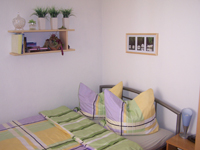
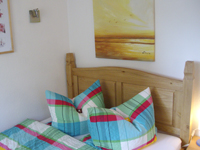
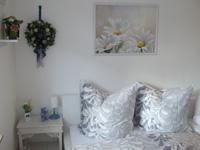
You want to walk to the cathedral? You want to walk to the fair? Then book our Ferienwohnung Köln, then you can easily walk to Cologne Cathedral! Simply cross the Rhine over the Deutzer Bridge and stroll through the old town. In about 14 minutes you have reached the cathedral! We look forward to your inquiry!