Cologne Flittard briefly introduced
Flittard belongs to the district of Mülheim in Cologne and is located on the right bank of the Rhine. The district is a suburb of Cologne and has an area of 7.74 km² and approximately 7889 inhabitants. The incorporation took place on April 1, 1914.

Location of Flittard
Flittard borders on Dünnwald to the east, Stammheim to the south, to the Rhine river to the west and to the north Leverkusen. Some of the Bayer plants are located in the Flittards area. The district has a lot of green space and is almost a green oasis in the city of Cologne. Despite the industry, the district has retained its village charm. Rheindeich is an old part of the town and three new areas in the east offer plenty of living space for the residents.
History
Flittard has its meaning of "flowing, washed earth". The name is also a reference to the flood risk that once existed. The district was flooded again and again until a dike was built in 1894/95. In 989 Flittard was first mentioned in a document. Flittard belongs to the Porz office, which in turn belongs to the Duchy of Berg. Flittard has been administered here since the Middle Ages. Here, too, French troops were occupied in 1795. In 1808 Flittard came to Mairie Mülheim, which was administered by the Rhine department.
In 1815 the district became part of the Kingdom of Prussia and the incorporation into Cologne took place in 1914. In 1972 the Cologne-Flittard station, which was on Edelhofstrasse, was closed to passengers. It was popularly called Aspirin Express and the station building was demolished. In 1898, the Chempark-Flittard - Cologne-Stammheim and Cologne-Mülheim lines were opened. Freight traffic is still in operation in Flittard.
Flittard population
As of December 31, 1990 there were 8,365 people in the district. Flittard counted 8201 people in 2000. As of the end of December 2013 there were still 7,850 residents, so it can be said that the district is shrinking.
.gif)
.gif)
.gif)
.gif)
.gif)
.gif)
.gif)
.gif)
.gif)
.gif)
.gif)
.gif)
.gif)
.gif)
.gif)
.gif)
.gif)
.gif)
.gif)
.gif)
.gif)
.gif)
.gif)
.gif)
.gif)
.gif)
.gif)
.gif)
.gif)
.gif)
.gif)
.gif)
.gif)
.gif)
.gif)
.gif)
features
The center of Flittard consists of small, country-style houses. The Bongartzhof is the oldest secular building and a half-timbered house with a brick infill and hipped roof dates from 1715. The parish church of St. Hubertus is Roman Catholic and has a west tower from the 12th century. The church also has an articulated helmet in Gothic style. In the years 1896/97 the nave was built as a stair hall. In 2013 the Immanuel Evangelical Church was built.
Other attractions in Flittard
And there is more to see!
- St. Pius is located at 7 Rene-Bohn-Strasse
- St. Hubertus is located at Hubertusstraße 3
- "Hillijehüüsje"
- The Paulinenhof by Count Franz Egon von Fürstenberg-Stammheim, which was born on March 24, 1797 in Herdringen. His father was Baron Theodor Hermann Adolph von Fürstenberg-Neheim and he acquired the Stammheim castle in 1818. Franz Egon bought the Fronhof in Flittard in 1828. Franz Egon rebuilt the farm and named it after his wife the "Paulinenhof".
- A preserved station of the optical telegraph line Berlin-Coblenz dates from Prussian times and this is the only one preserved. Franz Egon also bought this building because it was no longer used by the Prussian military. In this way, a rarity from the early days of communications technology was preserved and saved from decay.
- The Japanese garden is located in the district
Clubs
It's organized in Flittard!
Citizens' Association from 1989 e. V., among others:
- Sp.Vg. 1920 Flittard
- TV Flittard
- Flittarder KG
- MGV Flittard
- Good boy from 1948 e. V.
- KV Real Fründe
- Flittard Hunnejeloch from 1985 e. V.
- Musik-Corps Köln-Flittard founded 1970 e. V.
- St. Sebastianus Rifle Brotherhood Cologne-Flittard from 1594 e. V.
- KC Las Chicas
- KC Jecke Höhner
- KC Kölsch Mädche
Personalities Flittards
... are Monsignor Prof. Dr. Peter Opladen (1876-1957) and Microphone Mafia.
The Japanese Garden
In 1912, the Japanese Garden was opened next to the property owned by the former chairman of the supervisory board and administration of IG Farbenindustrie AG Carl Duisberg. It was created for the first time in the city of Leverkusen. How do you get the idea to create a Japanese garden or make it much larger? Well, the chairman had just returned from a trip around the world in 1926 and was so enthusiastic about Japanese garden culture that he definitely wanted to expand the garden. The implementation took place immediately. And from 1950 the beautiful garden was even accessible to everyone. Entry is free.
The location
In 1960 the Japanese garden was moved to its current position. The garden was moved south to an approximately 15,000 square meter garden area of the old Bayer plant. So it's in today's Chempark. There are three entrances.
The fauna and buildings
There are beautiful plants and landscapes to admire in this park. These were created with much love and care. Here we want to create a short list:
- Japanese gold maple
- chrysanthemums
- papyrus
- redwoods
In addition to the great plants and trees, there are also beautiful buildings or bridges and other smaller structures. Animals are in the park too! For example:
- a Japanese tea house
- ponds with approx. 3000 square meters of water surface
- Turtles
- Japanese Kois
- Bronze statues (Buddha, Geisha)
- Mikado Bridge
Award
The park is really beautiful and, of course, rightly received recognition in the form of a great placement in the competition "Germany's most beautiful park" . He was voted among the top 5! It is definitely worth a visit and is the top attraction in Cologne Flittard.
Hotels, guesthouses and accommodation in Flittard
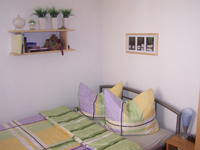
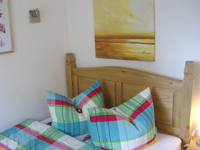
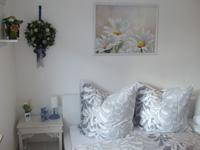
Are you looking for guest houses, hotels or other accommodations in Cologne Flittard ? Better book the holiday apartment Cologne in the city! Right where you actually want to go!